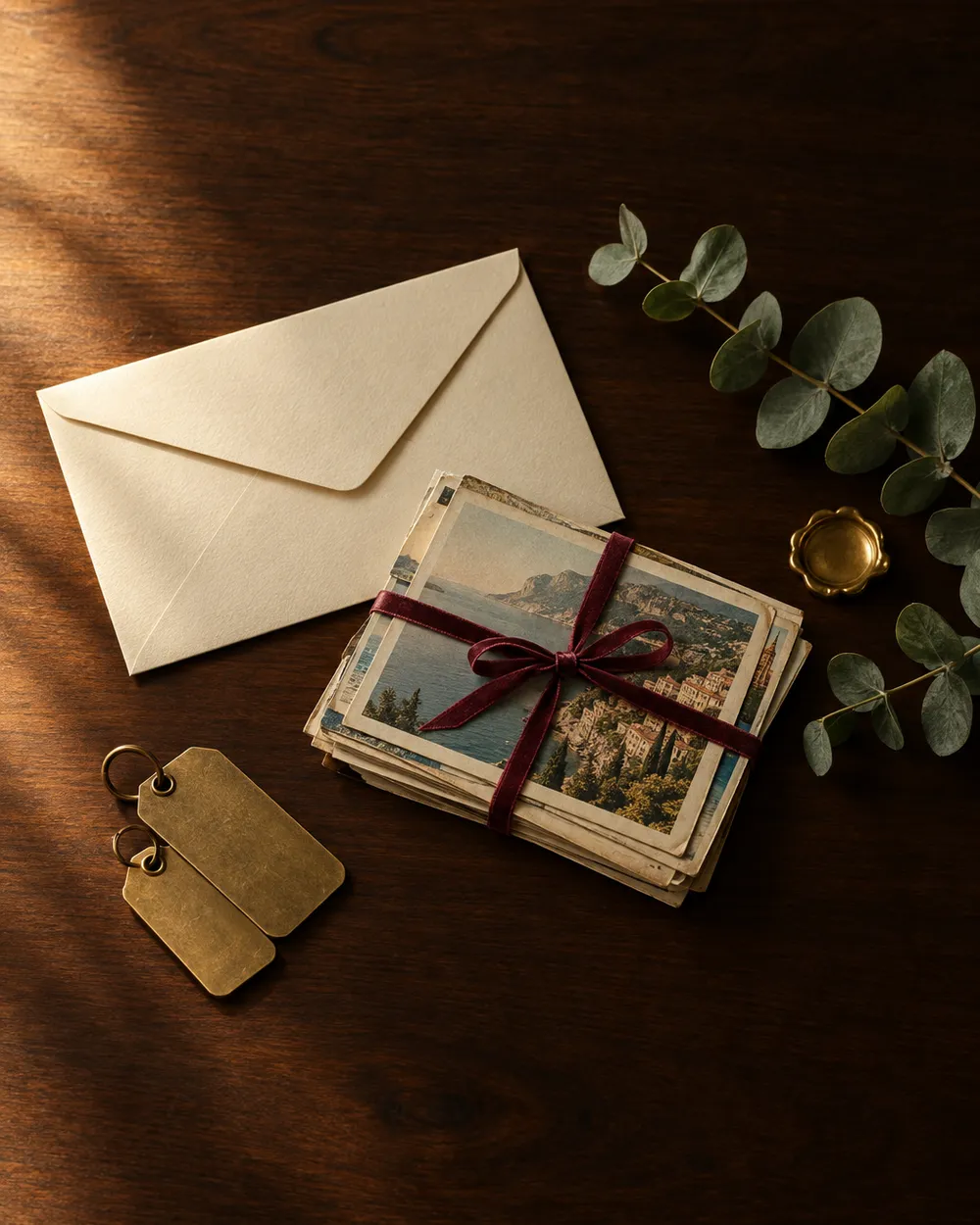
The long table: dinner in Tuscany.
What one unremarkable meal in the hills above Siena taught me about hospitality, and about hurry.
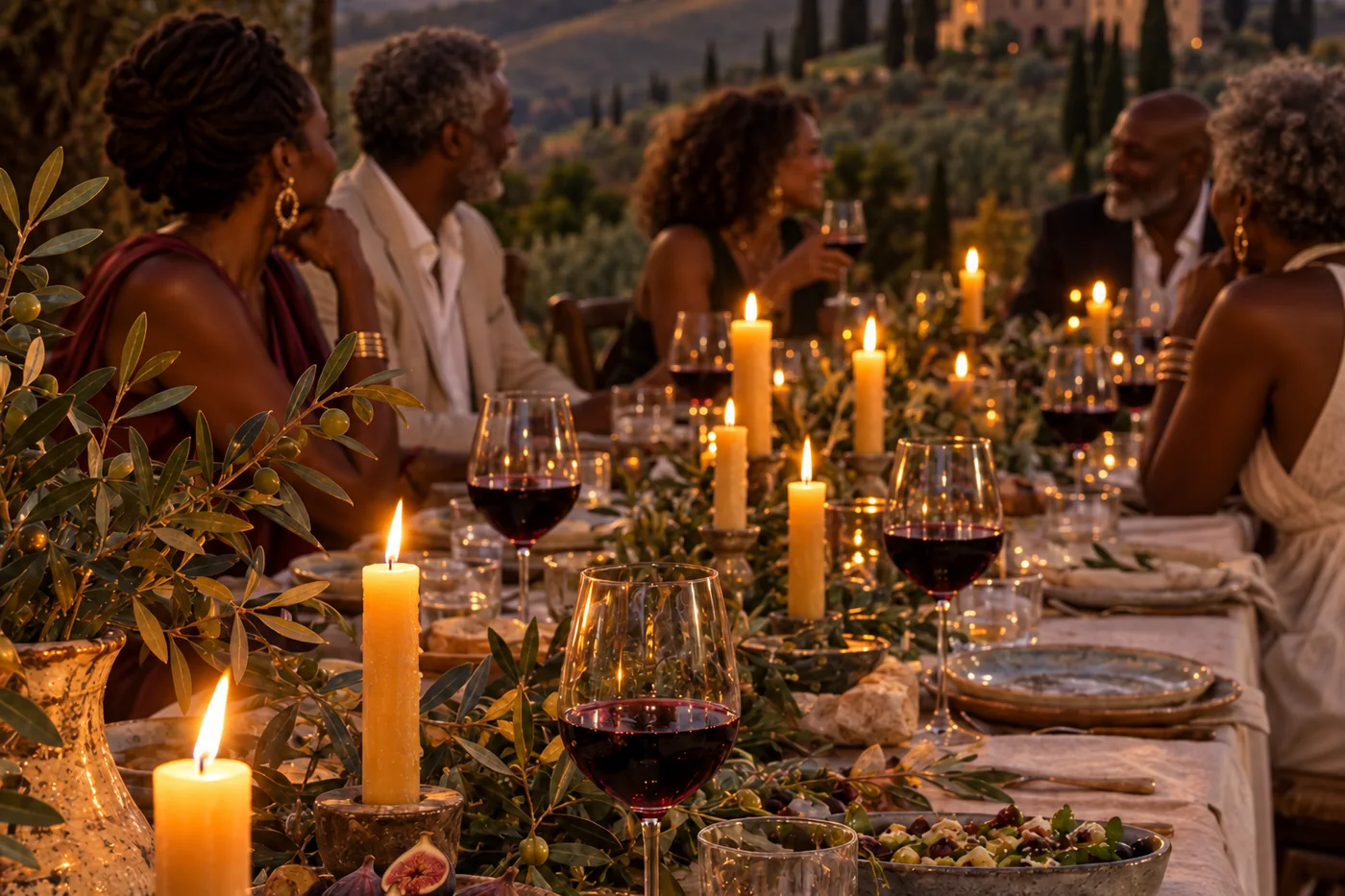
The table was forty feet long and made of doors. Someone’s grandfather had taken them off a barn decades earlier, and every August they came out, went onto trestles under the olive trees, and held dinner for whoever happened to be in the valley.
I had been invited by a woman I had met two days before at a market, in the way that happens when you travel alone and let it. There were perhaps thirty of us. I knew one name. By midnight I knew most of them, and I had rearranged something fundamental in how I think about hosting.
Nothing was impressive
This is the part I want to be precise about, because it is the whole lesson. The plates did not match. The wine was in unlabelled bottles from a neighbor’s cellar. The bread was yesterday’s, sliced thick and rubbed with oil and salt. There were figs in a chipped bowl and olives still on the branch and a bean dish that had clearly been made in quantity and without ceremony.
And it was the best meal of that year, or possibly several. Because nobody was performing hospitality. They were simply doing it, at scale, with whatever was in the house.
What takes the effort instead
The candles. There were dozens, in mismatched holders, lit before anyone sat down. The olive branches down the length of the table. The lights strung up in the tree, badly. The hour spent on how the table looked and not one minute spent worrying about the food.
I have sat at tables where the cooking was extraordinary and the evening was flat. That night taught me the ratio is the other way around. Atmosphere is the meal. The food only has to be honest.
They gave the evening four hours and the menu forty minutes. I had been doing it in exactly the wrong proportion for twenty years.
Time as the actual luxury
We sat down at eight-thirty. Nobody stood up until well after one. Nothing happened in those five hours — no speeches, no courses announced, no moving to another room. Plates were passed and refilled and passed again. Children fell asleep on chairs. Two men argued about a road for twenty minutes with enormous pleasure. The candles burned down and were not replaced.
I have thought a great deal since about how rarely I give anything five hours. And about how much of what I used to call hospitality was really just anxiety, beautifully plated.
What I brought home
- Buy the long tablecloth. Cream linen, too big, never ironed.
- Candles are not decoration. They are the invitation to stay.
- One dish in quantity beats four dishes in portions.
- Do not clear as you go. Clearing tells people the evening has a schedule.
- Invite the person you met two days ago. That is where the evening comes from.
I still cannot make that bean dish taste the way it did. I have stopped trying. It was never the beans.
Postcards from the road, once a month.
New destinations, honest notes on where I stayed, and the occasional thing I loved enough to tell you about. One letter a month — never more.
Your address stays private. Unsubscribe any time.